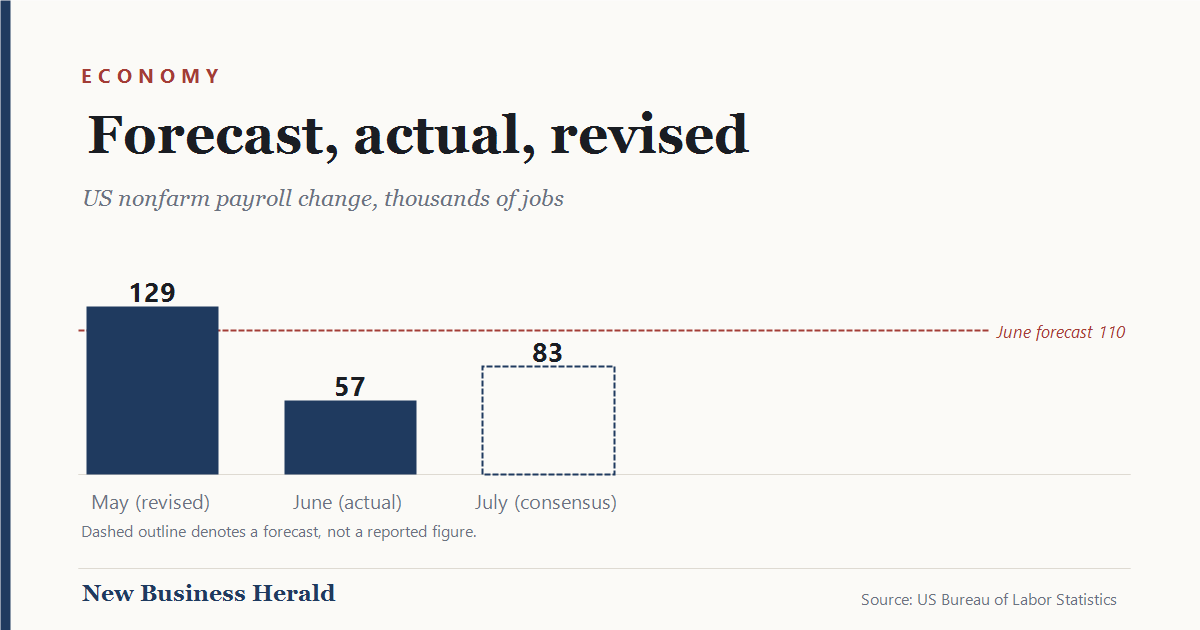
The July employment report landed at 8:30 this morning. The headline payroll figure is the least accurate estimate of July employment that will ever exist — and it is being reported as though it were final.
Choosing a Business Structure: Sole Proprietor, LLC, S-Corp or C-Corp
One of the first decisions a business makes and one of the hardest to unwind. Liability and taxation are separate questions — conflating them causes most of the confusion.
Cash Flow Management Fundamentals for Small Businesses
Profitable businesses fail regularly, and the mechanism is always the same: money owed arrives more slowly than money owed out. The cash conversion cycle, the thirteen-week forecast, and the warning signs.
Cloud Repatriation: Why Some Companies Are Moving Workloads Back
Cloud does not sell cheap computing. It sells elasticity — and charges for it continuously, including on workloads that never use it. When the arithmetic turns, and when it doesn’t.
AI Is Changing White-Collar Work. Measuring It Is the Hard Part
Organisations deploying AI across knowledge work often cannot tell whether it is working. That is a failure of measurement infrastructure that long predates the technology.
Index Funds vs Active Management: What the Evidence Actually Supports
Part of this debate is arithmetic, true by construction. Part is genuinely contested. Separating the two makes the argument far easier to follow.
Unit Economics: The Numbers That Decide Whether Growth Is Worth Having
A company can grow revenue indefinitely while destroying value with every additional customer. Contribution margin, CAC, LTV and payback period — and the ways each is routinely manipulated.

How an IPO Actually Works, Step by Step
An IPO is reported as an event and is actually a year-long process in which the listing is nearly the last step. What happens at each stage, and what to read before forming a view.
Reading a Cash Flow Statement: What the Income Statement Hides
The income statement is the easiest financial statement to flatter. The cash flow statement records only what actually moved — and reading the two together reveals most of what a company would rather you missed.
What an Inverted Yield Curve Actually Signals — and What It Doesn’t
The most respected recession indicator available is not a forecast. It is a summary of what a market with capital at stake already believes — and it is routinely over-applied.
How Tariffs Work — And Who Actually Pays Them
The importer pays the tariff at the border. Who bears the cost afterwards is determined by substitutability, market size and supply chain position — not by legislation.
CPI, Core and PPI: How to Read Inflation Data Without Being Misled
There is no single inflation rate. Different indices, built on different baskets and methods, routinely tell different stories about the same month. How to tell which one you are reading.